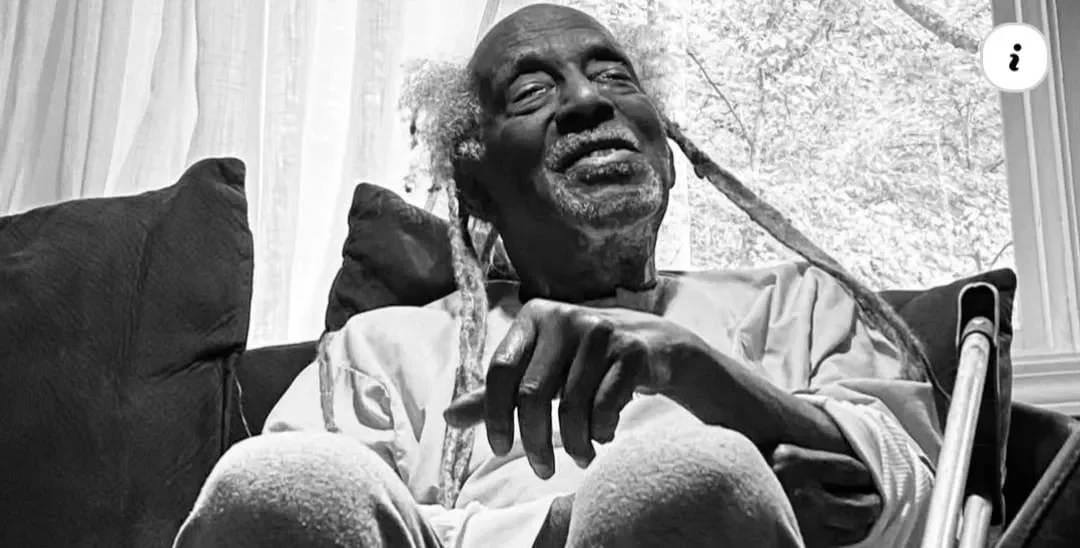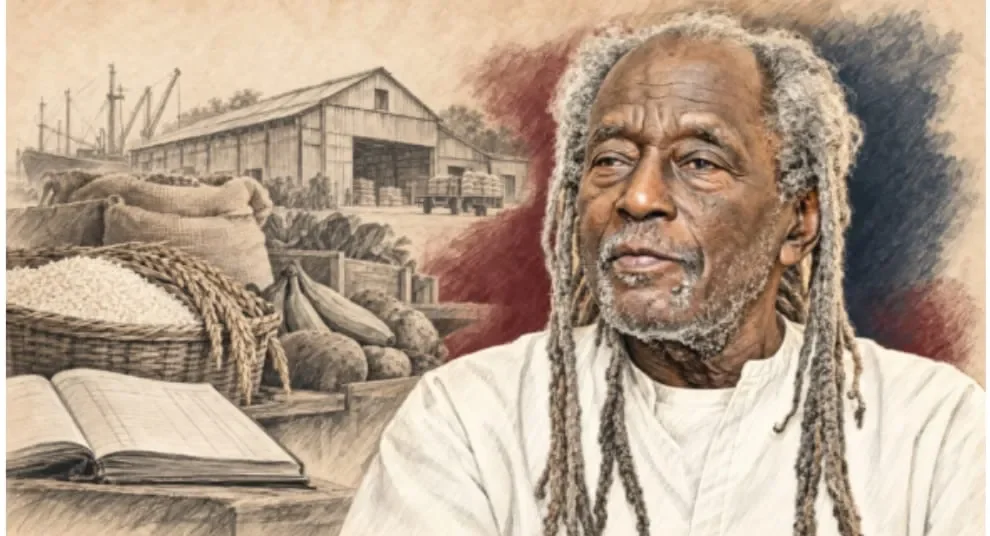
The passing of Baba Eusi Kwayana at 101 years marks the departure of one of the great leaders, witnesses and participants in Guyana’s long struggle for freedom, dignity and social justice.
He was born Sydney Evaston King at Plantation Lusignan, East Coast Demerara, in then British Guiana on 4 April 1925. His family moved to Buxton when he was 7 years old. Kwayana obtained his primary education from Lusignan Anglican and Cumberland Methodist schools. He started his teaching career at age 15 and studied privately to obtain a degree in economics.
Kwayana is a prominent feature in Guyana’s political history. In 1949, he co-organized the Buxton Rate Payers’ Association. The group successfully represented villagers on issues that undermined development of the village. Kwayana later became a member of the Buxton-Friendship Village Council, and then chairman of the local authority. Kwayana also founded the African Society for Cultural Relations with Independent Africa (ASCRIA), a pan-Africanist organization. In 1956, Kwayana founded County High School in Buxton, Guyana.
Kwayana was a key member of the Political Action Committee, forerunner to the People’s Progressive Party (PPP), which he helped establish in 1950. In 1953 he became a member of the PPP cabinet, serving as Minister of Communication and Works. The British army detained him in 1954. Following a split within the PPP, Kwayana and others formed the People’s National Congress (PNC) political party in 1957. He was then elected the party’s first Vice Chairman and its General Secretary in 1961. He also served as editor of the PNC’s news organ, the New Nation, and chairman of the Guyana Marketing Corporation.
In 1974, he left the PNC and together with Walter Rodney and others formed a pressure group committed to multi-racial politics - the Working People’s Alliance (WPA) which became a full-fledged political party in 1979. For The Walter Rodney Foundation (WRF), Baba Eusi’s passing carries particular meaning. He was Dr. Walter Rodney’s comrade in the Working People’s Alliance and shared Walter’s commitment to building Guyana into a country capable of transcending the racial divisions that colonialism had cultivated in Guyanese society. Together with Rodney and others, Baba Eusi Kwayana helped articulate a radical democratic vision in which African and Indian Guyanese could recognize their struggles not as competing histories, but as part of a common search for justice.
After Walter Rodney’s assassination on June 13, 1980, Baba Eusi became an important custodian of Rodney’s memory, preserving, through his writings and testimony, the political struggles, ideas, and works of his comrade.
In the following years, Baba Eusi remained a friend of the WRF and the Rodney Family. He was a constant presence at, and contributor to, the Annual Walter Rodney Symposium in Atlanta. In 2010, he was the first recipient of The Walter Rodney Award in appreciation of his exemplary leadership, outstanding accomplishments, dedication and service to the principles and ideals of human rights and social justice. In 2015, he also provided testimony at the Walter Rodney Presidential Commission of Inquiry.
Baba Eusi Kwayana was a mentor, teacher, poet, playwright, lyricist and singerwriter, political organizer, and Pan-Africanist. He belonged to a generation for whom independence was never simply the transfer of political power. He understood freedom as the deeper work of restoring human dignity, confronting the legacies of colonialism, and building a society in which ordinary people could genuinely participate in shaping their future.
Baba Eusi leaves a legacy of love for family, including his children, grandchildren and great grandchildren. And importantly, for the community - traveling to his home in Buxton, Guyana in 2025 for his 100th birthday. He has now returned to Guyana for this final leg of his journey. He will be buried in Buxton on 14 November 2026.
Baba Eusi’s life also belongs to the wider intellectual history of Pan-Africanism. His embrace of African consciousness formed part of a sustained search for cultural dignity, historical memory, and solidarity between Africa and its diaspora. His lifelong efforts to confront racial division in Guyana demonstrated that Black consciousness, working-class solidarity, and multiracial democracy could belong to the same emancipatory project.
Baba Eusi leaves behind more than a century of memories, both literally and figuratively; he leaves a political and moral inheritance. His life intersected with colonialism, independence, Black consciousness, Pan-Africanism, authoritarianism, popular resistance, and the unfinished struggle to give substantive meaning to freedom. In remembering this sage, we also remember the generation of Walter Rodney, who insist that ideas must remain connected to the lives and struggles of ordinary people.
Walk Good Baba Eusi.
For additional information, please visit https://eusikwayanalegacy.com/